The U.S.-Canada Dairy Dispute: A New Front?
Few trade topics return as reliably as dairy between the United States and Canada. The question in the title is whether a fresh round of tension is starting, and how a Texas farmer should read it.
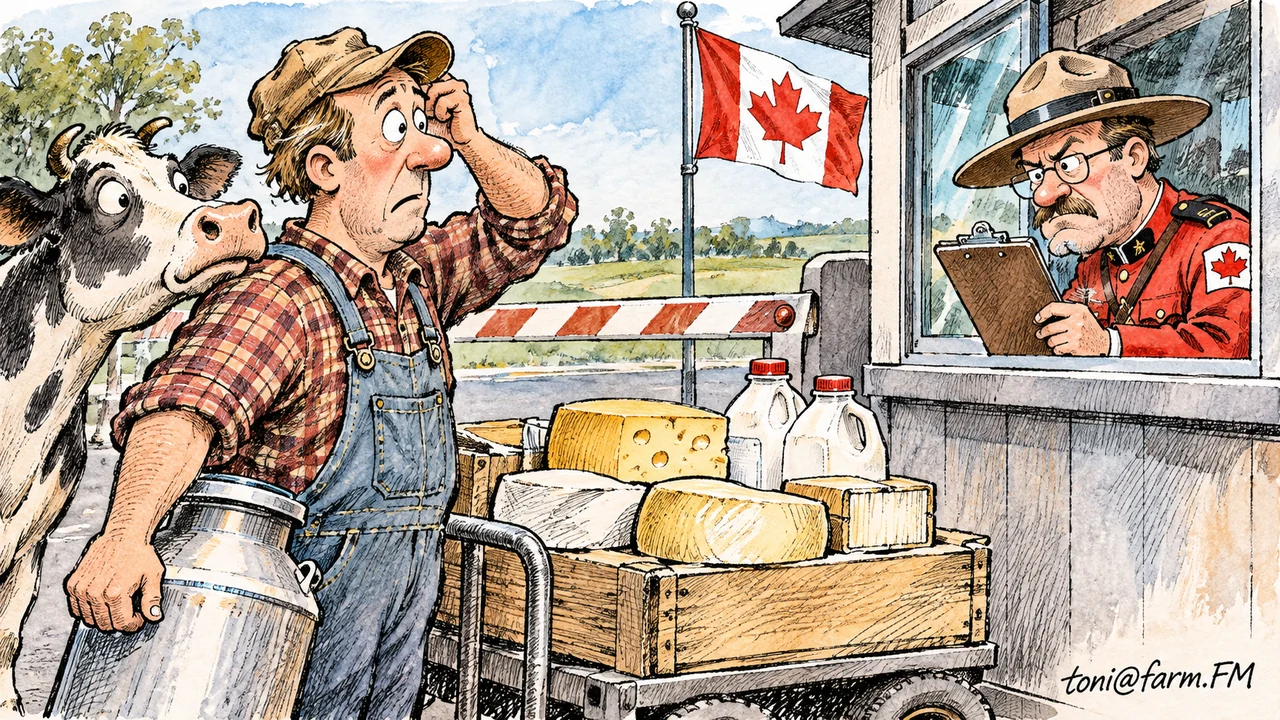
What is the basic disagreement?
Canada runs a supply management system for dairy, which controls production through quotas and protects the domestic market with high duties on imports above set quantities. American producers and processors say this limits their access. Canadian farmers and officials defend the system as a way to provide stable incomes and manage supply.
Both positions are long-standing and sincerely held. The details of any quotas, duties or panel decisions should be confirmed on the U.S. Trade Representative site, and any numbers in news coverage are as reported.
It helps to remember how much dairy is woven into each country's identity. In Canada, supply management has strong political support among farmers and many consumers. In the United States, export growth is a central argument for large dairy investments. When these two views meet, negotiations tend to be slow and emotional.
How do tariff-rate quotas work?
A tariff-rate quota lets a set amount of a product enter at a low duty, and anything above it pays a much higher one. The argument is usually over how the low-duty quota is divided, who gets to use it, and whether it is actually filled.
This can feel abstract, but the effect is practical. If a quota is allocated mostly to Canadian processors, U.S. exporters may have little chance of using it. If it is open to importers, trade can flow. The U.S. International Trade Commission publishes tariff information that helps you see the structure.
A hypothetical example: if a country allows a million kilos of cheese at a low duty and the quota is split among a handful of processors, an outside supplier may find that the nominal opening is closed in practice. That is why negotiators spend so much time on administration, not only on the headline tariff.
- Quota size
- Who is allowed to use the quota
- The high-duty rate above the quota
- Dispute settlement procedures
Why does it matter to Texas dairy?
Canada is a neighbor and a major customer for many U.S. agricultural goods, so any disruption has ripple effects. For Texas, the link is through processors and cooperatives that sell ingredients and finished dairy products north of the border, as well as through the general mood of trade relations.
Dumas lies far from the border, but a Panhandle plant's customers may not be. Ask your buyer how Canadian sales figure in its plans. The U.S. Dairy Export Council offers market data and policy commentary on the relationship.
Texas is also a large, growing dairy state, and Panhandle plants are among the newer, more export-minded facilities. That makes the state's industry sensitive to any ongoing shifts in access to North American markets, especially for ingredients.
What do the two sides argue?
Supporters of the U.S. position say that quotas and duties violate the spirit of trade agreements and shut out competitive exporters. Supporters of the Canadian system respond that supply management does not rely on government subsidies, stabilizes farm incomes and reflects a democratic choice about how to run an industry.
Some U.S. dairy farmers also admire aspects of supply management, which shows the debate is not a simple one. The National Milk Producers Federation and National Farmers Union offer perspectives from across the American farm world.
How do you follow developments responsibly?
Use primary documents. USTR publishes statements, and Congress.gov tracks legislation. The USDA Foreign Agricultural Service has country reports on Canada. Be careful with social posts that claim a new tariff has been imposed, and confirm with an official source first.
If you want a quick sanity check on whether a story is real, look for a date, an agency name and a document number. If those are missing, wait for confirmation.
Keep in mind that dispute panels and consultations can take months, and outcomes may be appealed or revised. Patience is part of reading trade news well, and the first headline is rarely the final word.
What should a producer do?
As with any trade tension, make your plan resilient. Know your breakeven, check Dairy Margin Coverage terms with your FSA office, and run your numbers through the budget tools at farm financial planning. Strong herd management from a dairy care guide supports margins in any trade climate.
For a lighter take, farm.FM has a dairy section and a satire page that regularly find humor in border trade squabbles. One relevant read is a farm.FM story on Canadian dairy and quotas. The Texas Department of Agriculture can help with state-level questions.
A final thought: do not base a farm expansion on the hope that a dispute will be solved in your favor. Build the plan on today's prices and costs, and treat any new market access as a bonus.
Sources and further reading
- USTR: U.S. Trade Representative
- U.S. International Trade Commission: tariff and trade data
- U.S. Dairy Export Council: dairy exports
- National Milk Producers Federation: dairy cooperatives and policy
- National Farmers Union: national farm organization
- USDA Foreign Agricultural Service: export markets and trade data
Ask locally: Ask your co-op how much it sells into Canada, and an Extension economist how quota rules affect cheese and ingredient sales.