The Role of Cooperatives in Texas Dairy Exports
Most Texas dairy farmers never ship a pound of product overseas, yet many are tied to exports through their cooperative. This article explains how that connection works and what to ask your co-op.
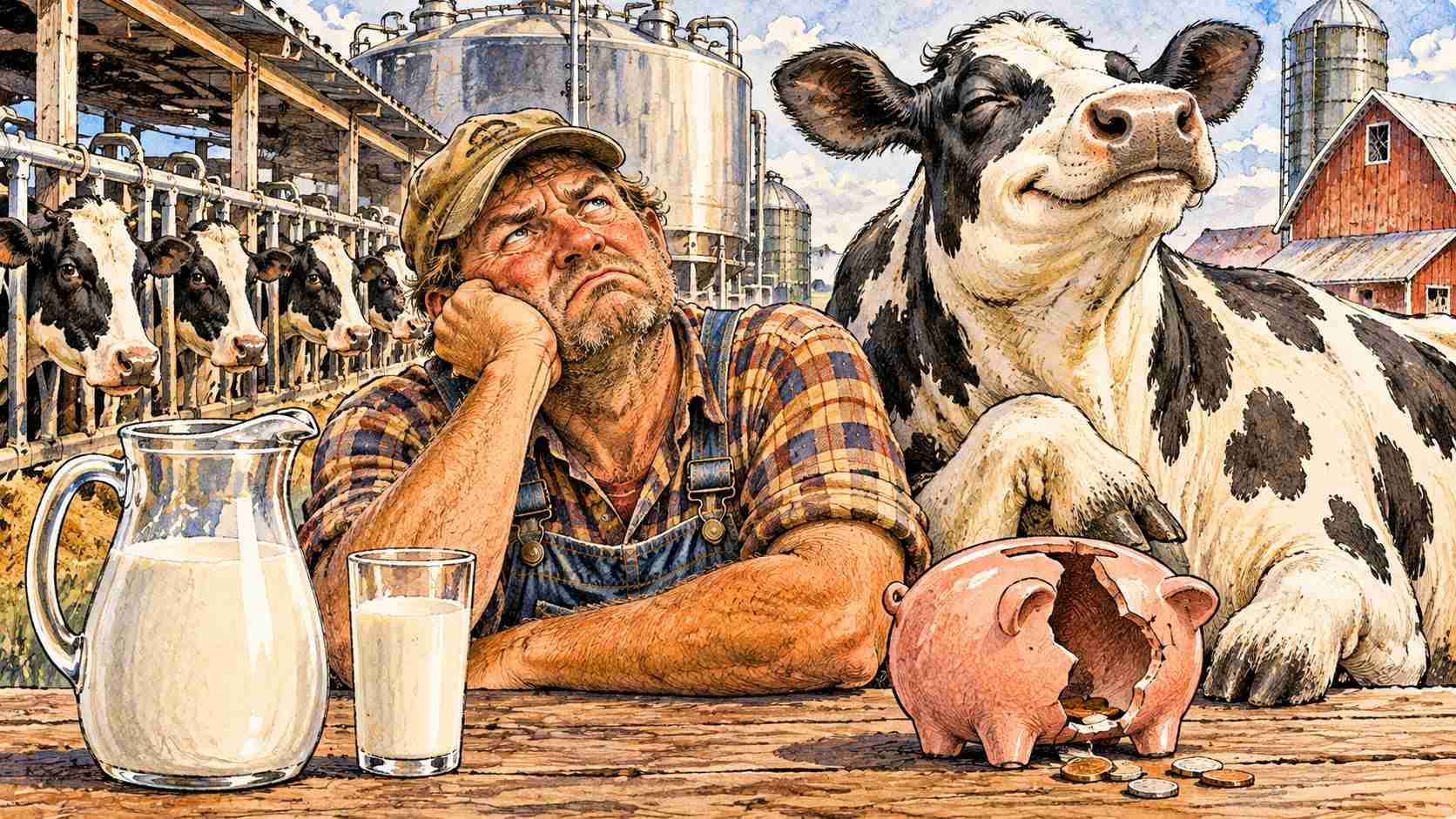
What does a dairy cooperative do?
A dairy cooperative is a farmer-owned business that markets members' milk, often operates plants and returns earnings to members. Some co-ops sell fluid milk, some make cheese, butter or powder, and some do all of the above.
The National Milk Producers Federation represents U.S. dairy co-ops in policy discussions, and it explains how farmer-owned marketing works. Details differ between co-ops, so ask yours.
Historically, cooperatives formed because individual farmers lacked bargaining power. A group could negotiate and invest where one farm could not, and that basic logic still applies in export markets.
How do co-ops connect farms to exports?
Co-ops own or supply plants that make exportable products, hire sales staff who sell to foreign buyers and sometimes partner with export marketing groups. The result is that a farmer's milk may become cheese or powder shipped abroad without the farmer ever seeing a container.
The U.S. Dairy Export Council is supported by dairy industry members, including co-ops, and works on market access and promotion. Ask your co-op whether it participates.
A hypothetical: a co-op plant makes cheese for domestic retailers and also sells whey to an overseas buyer. When the whey market is strong, the co-op's returns rise, and when it is weak, the cheese side may help balance it out. Members benefit from that mix without managing any of it directly.
Some co-ops also own brands or sell directly to retailers, and a few have their own international sales offices. Others work through trading partners. The structure shapes how closely members can follow the export results.
What advantages do co-ops bring?
Scale and expertise. A co-op can afford trade specialists, build relationships with importers and spread risk across many products. A small independent producer would struggle to do that alone.
Another advantage is the ability to move product among plants and markets as conditions change, so that milk finds the best home.
Another benefit is information. Co-op staff often see market signals early and can warn members about price swings or policy changes.
Ask also how export sales are shared. Some co-ops pool returns among all members, while others pay differently based on product streams. Understanding the formula helps you read your milk statement.
- Scale and shared costs
- Trade expertise and buyer relationships
- Flexibility among products and plants
- Representation in policy discussions
What questions should members ask?
Members have a right to understand how their co-op works. Good questions include how much of the co-op's output is exported, which products and markets matter most, and how export results affect the milk check or returns.
Also ask how the co-op manages risk, such as currency swings or buyer defaults, and how it communicates trade news to members. A well-run co-op will answer in plain language.
If a co-op declines to share information, that itself is information. Members can push for clearer reports through the board.
One more question: how does the co-op decide when to sell into export markets rather than domestic ones? The answer reveals how it thinks about price, risk and long-term customers. For wider economic context, USDA ERS publishes farm sector analysis.
How do you follow your co-op's trade story?
Read annual reports and newsletters, attend meetings and ask delegates or board members to explain the numbers. For outside context, USDA Dairy Market News and FAS trade data show broader market conditions.
The dairy herd guide supports the production side that keeps your milk export-grade, and the farm money guide helps you read co-op financial statements alongside your own.
If you attend annual meetings, bring written questions. It is easy to forget in the moment, and a written list keeps the conversation useful.
In Texas, a county extension agent can help interpret the numbers if you get stuck, and the Texas Farm Bureau also follows trade policy issues affecting members.
What is the sensible takeaway?
Co-ops are not magic, but they give farmers a seat at a table that would be hard to reach alone. Your job is to stay informed and speak up.
For more reading, dairy stories at farm.FM and the agribusiness section offer a less formal view, and a farm.FM story on dairy cooperatives fits the theme. Texas details may also be found through the Texas Department of Agriculture.
Co-op membership also comes with responsibilities, such as understanding governance and voting. Informed members make stronger co-ops.
Sources and further reading
- National Milk Producers Federation: dairy cooperatives and policy
- U.S. Dairy Export Council: dairy exports
- USDA Dairy Market News: weekly dairy price reports
- USDA Foreign Agricultural Service: export markets and trade data
- Texas Department of Agriculture: state agriculture agency
- Texas A&M AgriLife Extension: Texas extension service
Ask locally: Ask your cooperative's field representative or a board delegate how export sales affect your returns.