The U.S.-Brazil Trade Relationship: A Competitor Analysis
Brazil is better known for beef, soybeans and coffee, but it is also a dairy country with big ambitions. For American producers, the question is whether Brazil is a rival, a customer or both.
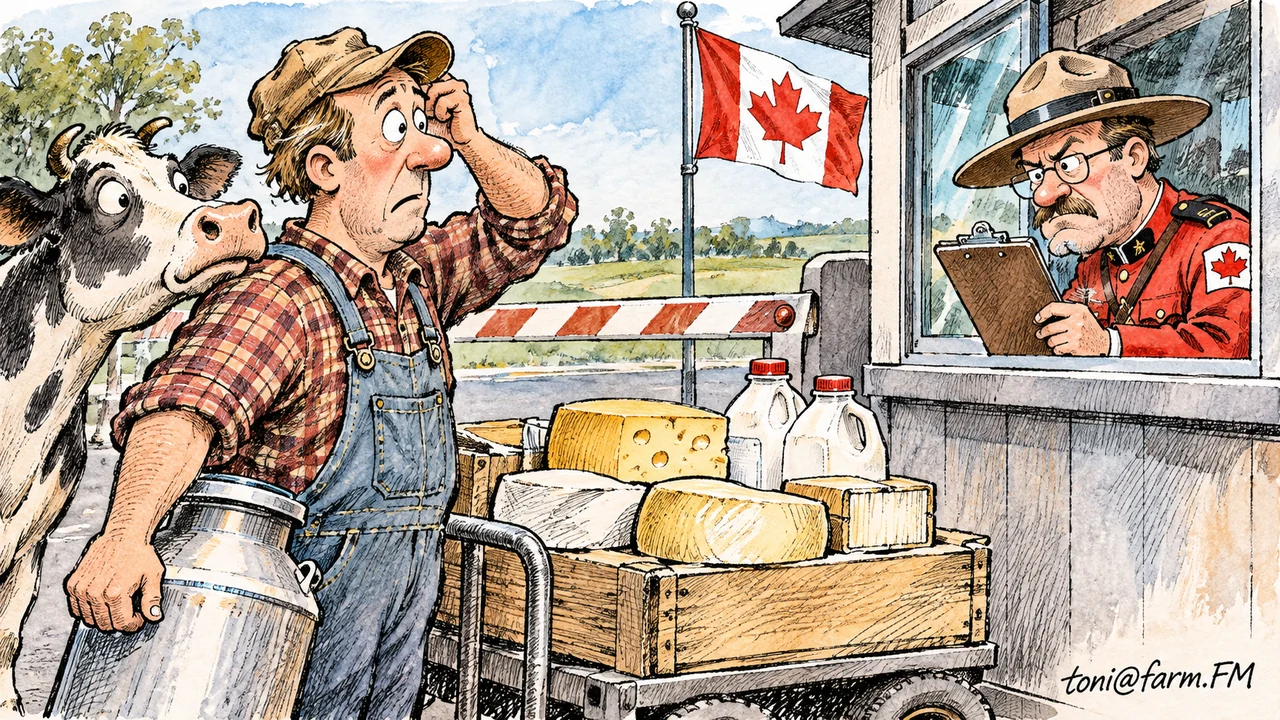
How should you size up a competitor?
A fair competitor analysis looks at five things: cost of production, scale, quality, trade access and risk. Brazil scores differently on each. This article offers a framework rather than a set of statistics, and any numbers you see elsewhere are as reported and should be checked at official sources such as the USDA Foreign Agricultural Service and USDA Economic Research Service.
The point is to ask good questions: where does Brazilian dairy compete with ours, and where does it not? Often the answer is that it competes in different segments rather than head to head.
A simple scoring sheet works well. List the five factors, give yourself and the competitor a plain rating on each, and write one sentence of evidence beside it. Repeat once a year. The exercise tends to reveal that your biggest challenges are usually cost and margin, not any single foreign country.
What advantages does Brazil bring?
Brazil has large areas of land, a warm climate that allows year-round grazing in many regions, and a major grain and oilseed sector that supplies feed. Those features can make milk production attractive, particularly for supplying a large home market.
Brazil's domestic market is itself huge, and much of its milk is consumed locally. That can limit exports but also gives producers a stable base. Competition with the U.S. may therefore be strongest in third-country markets rather than in the U.S. itself.
There is also a feed angle. A country that grows lots of grain and soybeans can often supply its own dairy herds with cheaper ration ingredients, and that shapes costs. U.S. producers face similar feed economics, which is why crop prices matter so much to milk margins.
- Land and climate suited to year-round production
- Access to feed grains and soybean meal
- A large home market
- Growing processing capacity
Where does Brazil face limits?
Challenges include infrastructure, variable herd productivity, currency swings and uneven quality among producers. Animal health status and food safety rules can also restrict access to some export markets. Not all Brazilian dairy is highly efficient, and many farms are small.
These weaknesses are worth stating carefully, because stereotypes help nobody. Some Brazilian operations are modern and efficient, and the industry has been changing. The International Trade Administration provides country commercial guides that can give a balanced view.
Exchange rates matter here too. When the Brazilian real weakens against the dollar, its exports look cheaper to foreign buyers, and when it strengthens, the reverse. These swings can change competitive positions faster than any improvement in farm efficiency.
How might Brazil affect Texas dairy?
Mostly through world prices for powders and other commodity products, and through competition for customers in Latin America and elsewhere. If Brazil exports more, buyers may have more choices. If its production struggles, buyers may look to others.
For a Dumas producer, the lesson is to track the global picture lightly and focus on the farm. Feed costs, herd health and component yields matter more week to week. See this dairy herd health guide and crop calendar planning pages for feed-side planning.
The Texas Panhandle has a feed advantage of its own, with corn and forage production close to dairies. Using that advantage well, with sound crop and ration planning, is one of the best ways to hold your own against foreign competition.
What do supporters of open trade and protection say?
Supporters of open markets argue that competition from Brazil keeps prices reasonable for consumers and pushes producers to improve. Supporters of protection respond that imports from lower-cost regions can undercut American farms and that standards for animal welfare and the environment differ.
Both arguments reflect real concerns. The U.S. International Trade Commission publishes trade data and investigations that show how disputes are actually resolved, and the U.S. Dairy Export Council gives an exporter's view.
Remember that tariffs and quotas are only part of the story. Sanitary standards, plant approvals and shipping costs determine whether a competitor can actually reach a market. Competition is rarely only about price.
What should a producer do with this analysis?
Use it as a checklist for thinking about any competitor. Where do you have an edge? What risks are outside your control? Which of your costs could you reduce? Keep an eye on risk tools like Dairy Margin Coverage and confirm current terms with your FSA office.
For commentary, farm.FM covers the global side of farming with humor in its agribusiness section and satire page. One related read is a farm.FM story on Brazil and dairy competition. The Texas Department of Agriculture can also help with state trade questions.
Sources and further reading
- USDA Foreign Agricultural Service: export markets and trade data
- USDA Economic Research Service: farm economy data and analysis
- International Trade Administration: export help for U.S. businesses
- U.S. International Trade Commission: tariff and trade data
- U.S. Dairy Export Council: dairy exports
- USDA NASS: agricultural statistics and surveys
Ask locally: Ask a Texas A&M AgriLife Extension economist how South American production affects world powder prices.