The U.S.-Mexico Sugar Dispute: Lessons for Dairy
Mexico is the top customer for a great many American dairy products, and a dispute over a different commodity, sugar, shows how quickly a trade relationship can wobble. There are lessons worth drawing for milk.
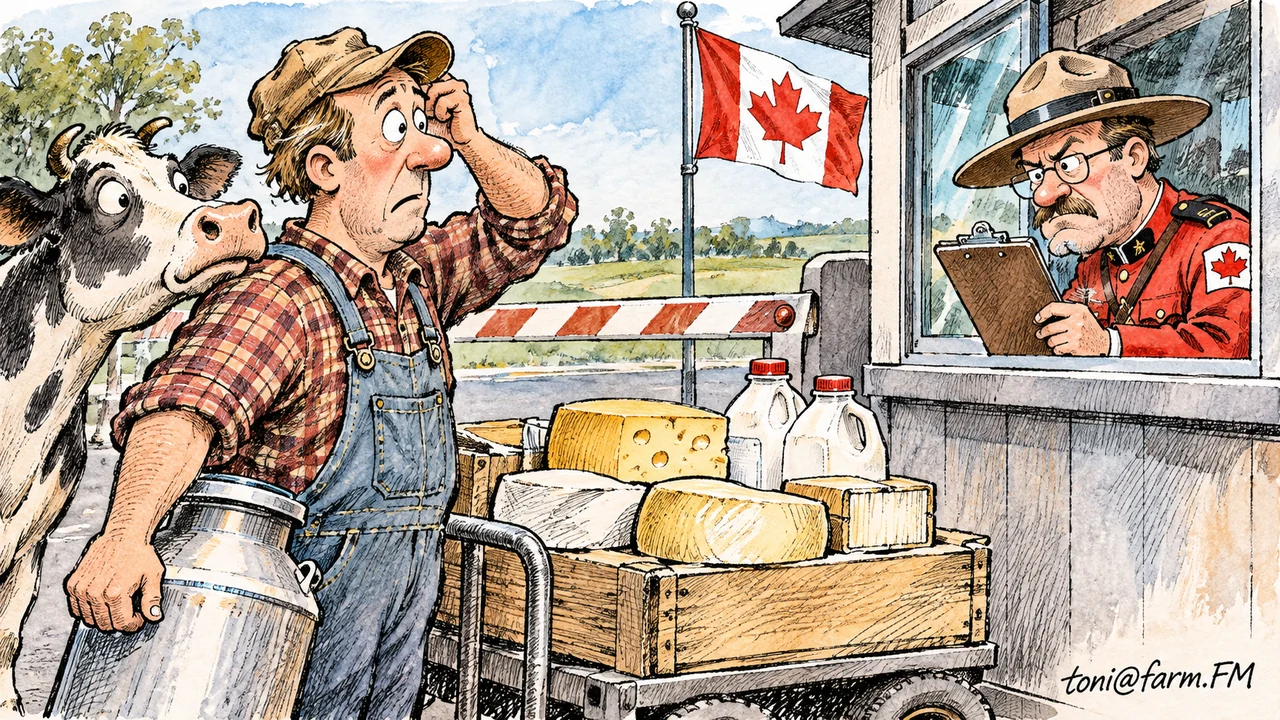
Why would a sugar fight matter to a dairy farmer?
Trade disputes rarely stay in one lane. Governments that are negotiating over one product often connect it, formally or informally, to others, and a country that feels wronged on sugar may feel less generous on cheese. The point of studying sugar is to understand the tools and habits of trade disagreements, not to claim that dairy will be hit.
For the facts of the sugar case, including agreements, duties and legal findings, go to the U.S. Trade Representative and the U.S. International Trade Commission. This article describes how such disputes tend to work, and any figures you see elsewhere are as reported.
It is also worth saying what this article does not do. It does not predict that dairy will be targeted, and it does not recount the legal history of the sugar case. It uses the dispute as a case study, the way a farm manager might study a neighbor's drought year to prepare for his own.
What is a suspension agreement, in plain English?
In some trade cases, instead of imposing penalty duties right away, governments negotiate an arrangement in which the exporting side agrees to limits, such as minimum prices or volume caps, in exchange for the case being paused. Those arrangements can last years, and they can be revised or terminated.
For dairy, the lesson is that a deal that looks settled can be reopened. A producer who assumes today's rules will last forever may be surprised. Reading the termination and review provisions is as important as reading the headline benefit.
Hypothetically, imagine a dairy export agreement with a minimum price clause. It protects against dumping, but it can also raise costs for buyers and cause friction. Every tool in trade policy has a tradeoff, and it pays to ask who benefits and who pays.
- Price floors or volume limits can replace penalty duties
- Agreements can be reviewed, revised or ended
- Compliance is monitored, and disputes can restart
- Other industries can be pulled into the argument
How important is Mexico to U.S. dairy?
Mexico is a very large buyer of U.S. cheese, milk powder and other dairy products, which is one reason trade officials and exporters watch the relationship closely. The USDA Foreign Agricultural Service has country reports with details, and the U.S. Dairy Export Council follows demand and regulation there.
For a plant in the Texas Panhandle, Mexico is also physically close. Trucks and rail can reach customers faster than ships to Asia, and a shorter supply chain can mean fresher product and lower freight. That geography is one of Texas's advantages.
What lessons carry over from sugar to milk?
First, enforcement matters as much as agreements. Rules on paper only help if they are followed and if there is a way to settle disagreements. Second, big customers can use market access as influence, so exporters benefit from diversifying. Third, domestic politics matter on both sides, and farmers in each country will defend their own interests.
Fourth, paperwork and standards can be used quietly to slow trade, even when tariffs are zero. Certificates, inspections and labeling can all become friction points. U.S. Customs and Border Protection publishes export documentation guidance that is worth knowing.
What do supporters and critics of tough trade enforcement say?
Supporters argue that firm enforcement protects American producers from unfair practices and sends a message that rules must be followed. Critics respond that aggressive actions can invite retaliation and put other exporters, including dairy, at risk.
There is no clean answer, and thoughtful people differ. The GAO and USDA Economic Research Service have published independent analyses of trade actions that are useful for balance.
A final point on tone. Trade disputes can become angry, but dairy trade with Mexico runs on long relationships between plants, distributors and retailers. Those relationships tend to cushion shocks better than headlines suggest.
How should Texas producers prepare?
You cannot control a negotiation, but you can control your exposure. Ask your buyer how much of its business depends on Mexico and what contingency plans exist. Keep cash reserves, review Dairy Margin Coverage terms with FSA, and use a farm money planning guide to stress-test your numbers. This dairy guide covers cost control on the herd side.
For some lighter commentary, farm.FM has a farm economics section and a satire page, and one relevant read is a farm.FM story on Mexico trade. The Texas Department of Agriculture can help with Texas-Mexico trade questions.
Finally, keep records. Your milk checks, your component tests and your input costs tell you what is really going on, and they are the best defense against being misled by dramatic trade headlines.
Sources and further reading
- USTR: U.S. Trade Representative
- U.S. International Trade Commission: tariff and trade data
- USDA Foreign Agricultural Service: export markets and trade data
- U.S. Dairy Export Council: dairy exports
- U.S. Customs and Border Protection: import and export rules
- GAO: government watchdog reports
Ask locally: Ask your processor how much business depends on Mexico, and Texas A&M AgriLife Extension about cross-border trade resources.