The Future of U.S.-Canada Dairy Trade
The U.S. and Canada trade a great deal of dairy, and they argue about it just as much. Here is a practical way to think about where that relationship could head, and what Texas producers can do with the uncertainty.
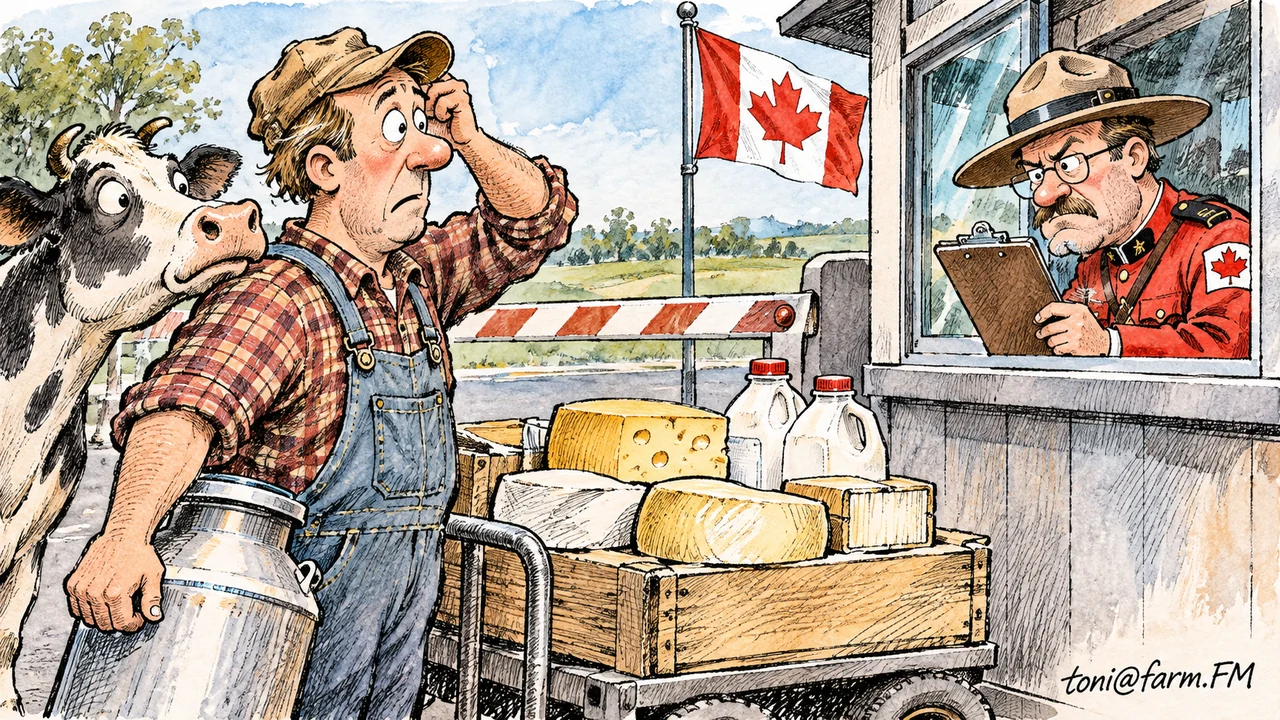
Why does this relationship keep making headlines?
Canada runs a supply-managed dairy system that limits imports with quotas and tariffs, while the United States has a larger, more export-oriented sector. Each side believes the other's rules put its farmers at a disadvantage.
Because the two economies are tied together by a long border and a trade agreement, small policy changes can ripple out. The USTR publishes the formal U.S. position, and USDA's Foreign Agricultural Service reports on Canadian market conditions.
The relationship is not all conflict. Cross-border supply chains in packaging, equipment, genetics and feed move freely in many cases, and dairy businesses on both sides work together every day. Disputes get the headlines because they are sharp, while cooperation is mostly quiet.
Think about the border itself. Millions of dollars of goods cross each day on trucks, rail and pipelines, and a dairy case is one small piece of that. That scale is why governments tend to settle rather than escalate.
What issues are likely to stay on the table?
Several recurring themes show up in coverage: how quota is allocated, treatment of milk protein ingredients, and rules about product names. Disputes over these have gone to formal panels in the past, and they may again.
Because the details are technical, ask for plain-language summaries from industry groups and compare them with the official documents. If the two disagree, the official text wins.
Because the issues are technical, a glossary helps. Learn three terms: in-quota rate, over-quota rate and allocation. With those, most trade stories become readable.
- Quota allocation and administration
- Milk protein and ingredient rules
- Product naming and labeling
- Dispute settlement procedures
What could change in the next few years?
Possible changes include new quota rules, adjusted tariffs, or revised dispute procedures. Domestic politics in both countries also matter, since dairy is sensitive on both sides of the border.
Nobody can say how it will go, and anyone who claims to is guessing. A better approach is to plan for a few paths: no change, modest change and large change, and ask what each would do to your processor.
Think of it like a weather outlook. Forecasters offer probabilities and ranges, not certainties, and a sensible farmer plans accordingly.
How does it reach a Texas dairy?
Texas producers are not selling milk to Canada. The effect is through processors that sell cheese or ingredients north of the border, through global price levels and through broader trade negotiations that include other issues. If Canadian access improves, a Texas plant may see new customers. If not, it keeps looking elsewhere.
The U.S. Dairy Export Council follows these developments from an exporter's view and the National Milk Producers Federation from a farmer cooperative view.
Genetics and equipment trade across the border too, which is a reminder that the relationship is broader than cheese. For equipment context, the tractor and equipment guide touches on how machinery markets work.
A hypothetical: if a Canadian buyer cut orders for a Texas whey product, the plant would look for a replacement customer, probably at a slightly lower price at first. That is the type of ripple processors plan for.
How should a producer prepare?
Keep the farm's financial position flexible. A healthy working capital cushion, modest short-term debt and an honest breakeven number let you adapt to a rule change without panic. The farm finance guide offers budgeting and planning ideas.
Dairy Margin Coverage is one federal program producers look at for margin protection. Confirm current terms, since details change.
Talk to your lender before a shock, not after. A banker who knows your plan can often offer more flexibility than one who finds out late.
If you want a longer view, USDA ERS publishes trade outlooks that put dairy in the wider farm economy, and NASS publishes the production numbers behind them.
Where do you find honest updates?
Choose a handful of dependable sources, such as trade agency releases, co-op newsletters and AgriLife Extension briefings. Check them on a schedule rather than constantly.
For something lighter, farm.FM's dairy stories and the agribusiness section are good breaks, and a piece on U.S.-Canada dairy trade frames the topic with a smile. Use official documents for decisions.
Over time, the most useful habit is simply to notice when a claim has no date or no source. Those are the stories to treat with caution.
Treat forecasts as conversation starters. The people who write them often change their minds as new data arrives, which is a sign of good analysis rather than a flaw.
Sources and further reading
- USTR: U.S. Trade Representative
- USDA Foreign Agricultural Service: export markets and trade data
- U.S. Dairy Export Council: dairy exports
- National Milk Producers Federation: dairy cooperatives and policy
- Dairy Margin Coverage: FSA Dairy Margin Coverage program
- Texas A&M AgriLife Extension: Texas extension service
Ask locally: Ask your cooperative's government affairs staff how Canadian access affects your processor.